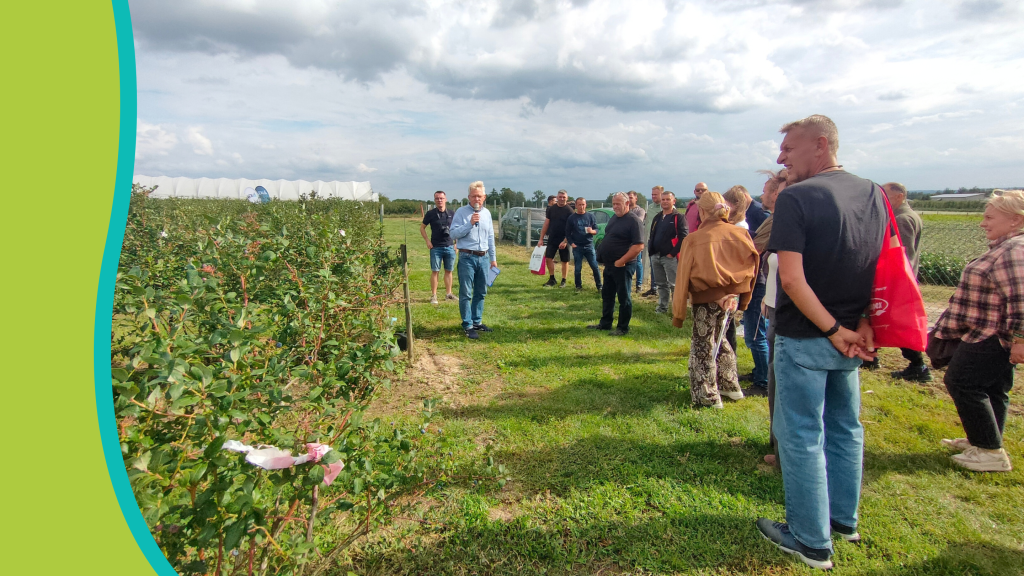
The AdvisoryNetPEST demonstration and training event,“Increase the precision in pesticide applications”, took place on 12 May 2026 at Nuntorp Farm in Brålanda, Sweden.
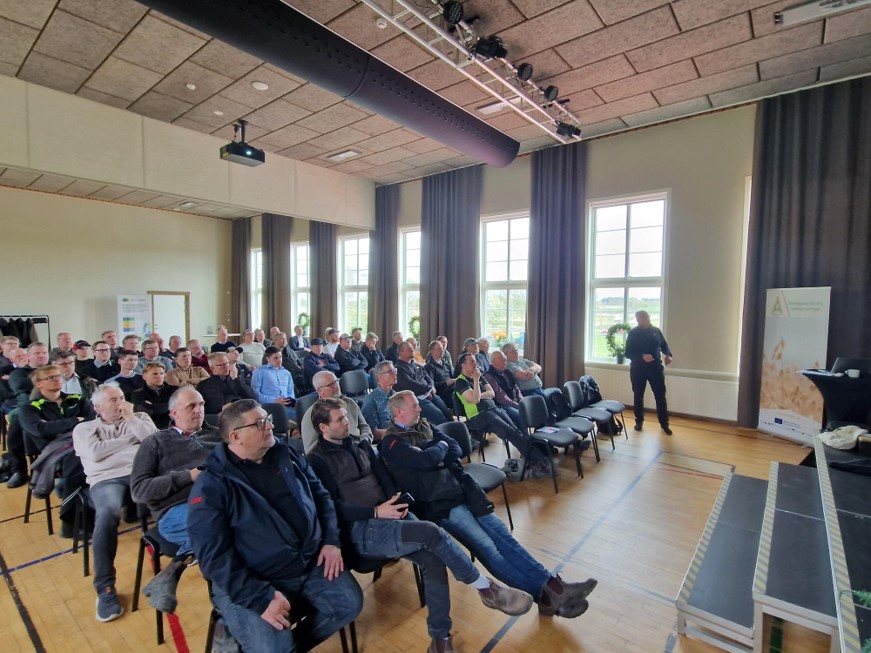
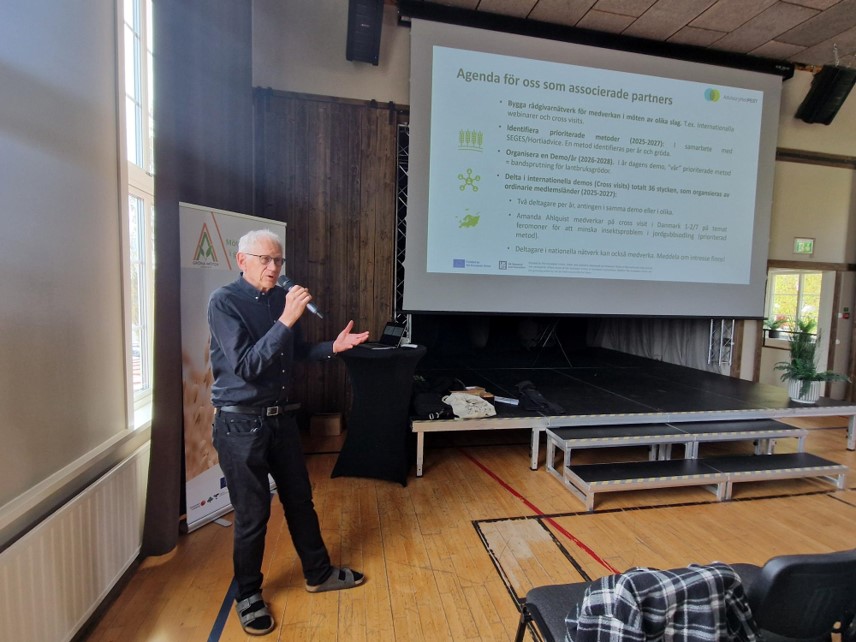
The event opened with an introduction to AdvisoryNetPEST, outlining the aims of the project and the benefits of participating in the network. This was followed by three expert presentations addressing the economic, biological and practical considerations when applying technologies to reduce pesticide use.
The presentations highlighted how existing equipment can be used more efficiently and emphasised both the opportunities and the constraints linked to precision application. Particular attention was given to the challenges of adjusting herbicide doses in fields with variable weed density, as well as regulatory limitations that prevent exceeding the standard dose in any part of the field. In addition, an overview was provided of systems that can be combined to enable site specific application to function effectively.
Technologies demonstrated to reduce pesticide use
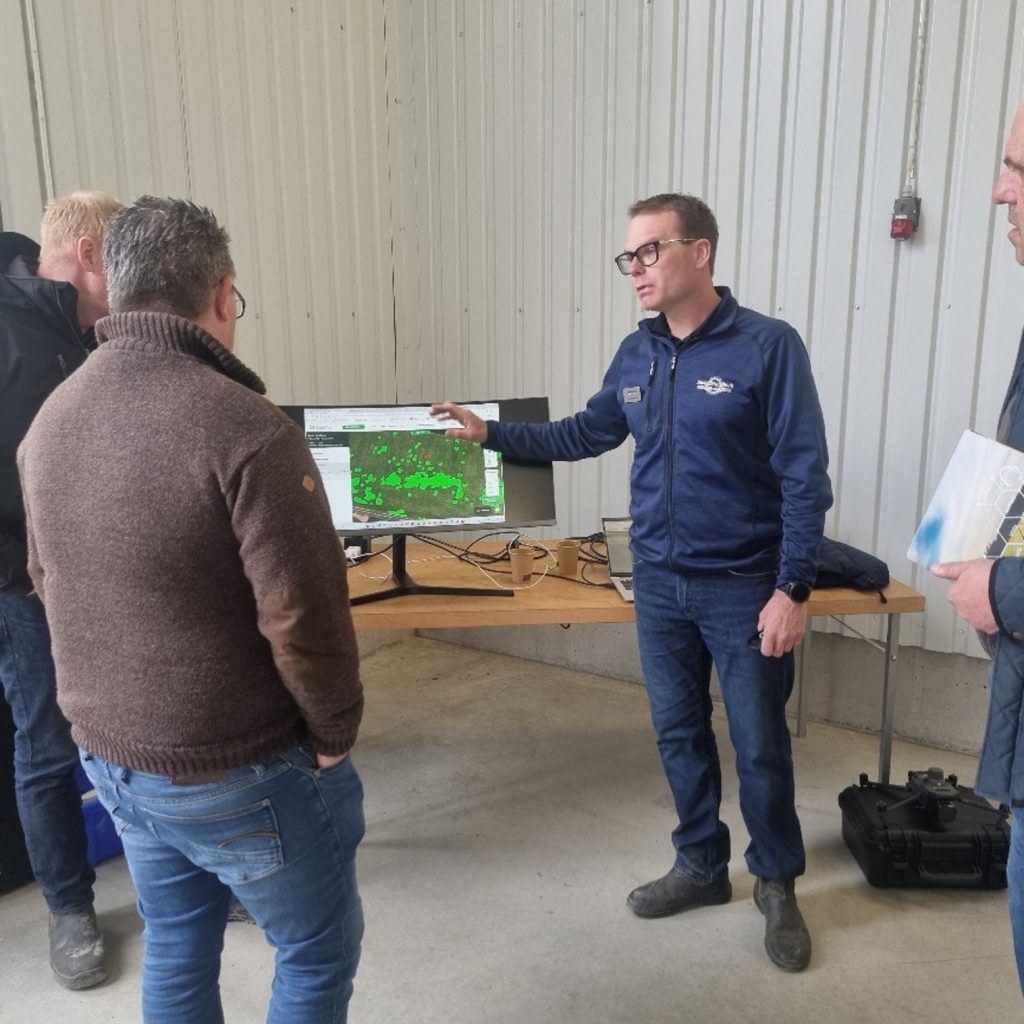
Participants were divided into three groups and rotated between dedicated stations showcasing different solutions.
At these stations, several technologies were presented, including PWM technology, CultiWise: drones to collect data and produce application files, and other solutions available on the Swedish market such as DAT‑Ecopatch and PerPlant – Spray with Care.
The small group format, with 15 to 20 participants at each station, created favourable conditions for discussion and interaction.
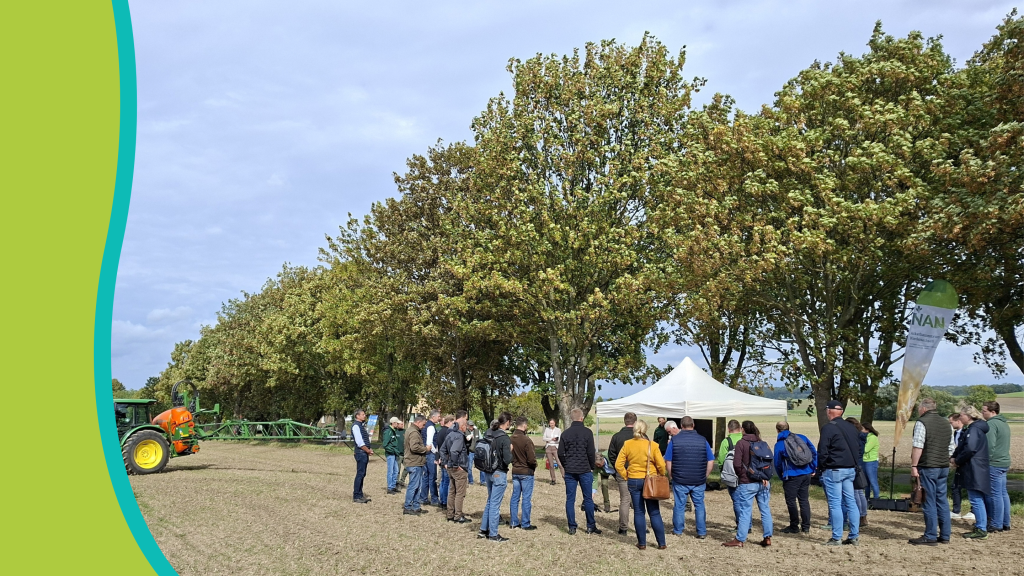
Field demonstration of precision spraying
The practical component of the event included a field demonstration of site specific spraying, band spraying, adjustment of boom height and PWM‑technology, using five different sprayers from Amazone, Horsch, Hardi, John Deere and Ag Leader.
The demonstration showed site specific spraying using application file and band spraying, as well as how to achieve a uniform dose when the sprayer turns using PWM‑technology. The results were illustrated using water sensitive paper, providing a clear visualisation of spraying accuracy.
The Novel Approach band spraying was demonstrated using a Horsch LEEB 6 LT sprayer. Nozzles with angle of 40° were used, and water sensitive paper confirmed the efficacy of the technique.
Key highlights and lessons learned
Among the main highlights were the discussion on obstacles and solutions when applying variable rates of pesticides, the presentation of technologies such as DAT‑ecopatch, and the live demonstration of band spraying and spot spraying.
A central message was that variable rate application of pesticides is relatively easy to implement, and that the necessary knowledge is readily accessible. Importantly, participants learned that large investments are not always required to get started.
Technologies such as CropSAT satellite images can be used for variable rate applications of fungicides, for example applying higher rates in areas with high crop density. Similarly, an N‑sensor, often already used for nitrogen management, can support this approach.
Additional solutions, including the CultiWise product, were presented as relatively low-cost entry points. Furthermore, existing sprayers can be upgraded with PWM‑technology, making it possible to significantly improve spraying efficacy without major investment.
The adoption of DAT‑ecopatch technology in Sweden was also highlighted, with around 10 systems currently in use and increasing over time. The technology enables savings of on average 43% of herbicides applied, contributing directly to reduced pesticide use.
Overall, the demonstration proved to be an effective way of communicating how precision application techniques work in practice, while encouraging direct engagement between participants and technology providers.
Participants and engagement
The event gathered 56 participants, including farmers, advisors, industry representatives and researchers. Interaction was particularly strong during the station-based sessions, where the small group format facilitated discussion and knowledge exchange.