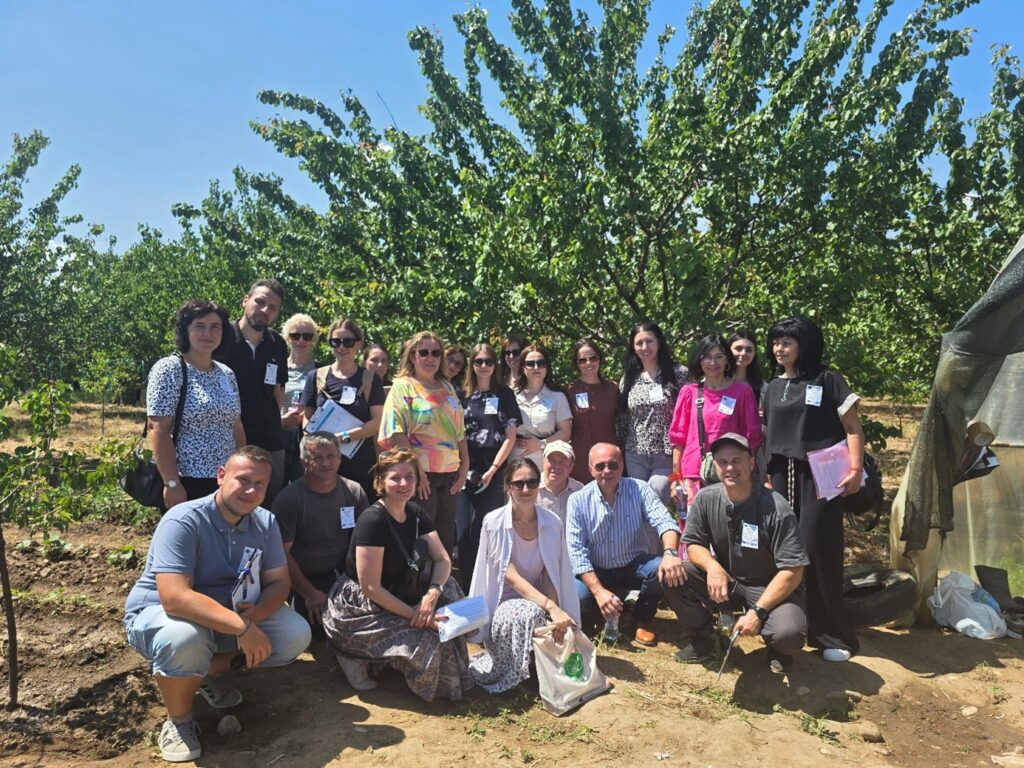
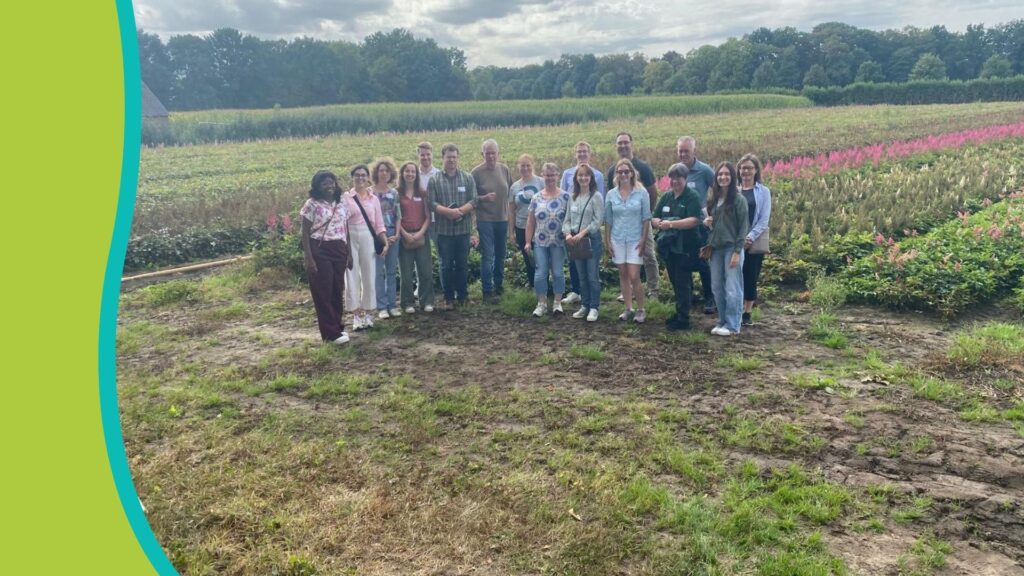
In early June 2025, AdvisoryNetPEST partners from Greece and Romania took part in a cross-visit hosted by NAAS, in Bulgaria. Over 21 participants joined the two-day event held on 3–4 June 2025, which focused on a highly practical, farmer-led Novel Approach for ecological tomato production. The field demonstration took place on the farm of Anton Mandilov, who presented his natural spray solution used against tomato moths—an approach that has already brought impressive results.
A Natural Solution for Tomato Moth Control
Novel Approach: Ecological tomato cultivation using an ecological spray solution and bioagents against tomato moths
During the demonstration, Anton Mandilov showcased how he prepares and applies a fully natural spray mixture consisting of:
- 1 L of raw fresh milk
- 70 g of baking soda
- 2 aspirin tablets
- 4 cubes of bread yeast
- 15 L of water
This mixture offers an accessible, affordable, and chemical-free alternative for protecting tomatoes from moth infestations—especially beneficial for small family farms aiming to preserve taste, quality, and consumer trust.
The Farm Context: Small-Scale, Ecological and Diversified
The farm managed by Anton Mandilov covers 0.46 ha, including:
- 0.020 ha greenhouse tomatoes
- Orchard crops (apricots, cherries, peaches)
- Grapes (Pamid)
- 110 beehives
The farm sits on alluvial-meadow soil, with loose, well-aerated horizons and a neutral to slightly alkaline reaction—ideal for vegetable cultivation. Irrigation is currently supplied via a pump from a canal, with future plans for a well.
Implementation: Simple, Accessible and Family-Supported
Anton relies on family labour to maintain the crops and has prepared a dedicated storage room for equipment. A separate sprayer is used exclusively for tomatoes to ensure the purity of the ecological method.
The practice proved extremely easy to implement:
- No specific qualifications are required
- The ingredients are widely available
- The solution can be mixed in approximately five minutes
Anton did not encounter any difficulties during adoption.
Modifications and Future Adjustments
No changes to the spray formula are planned, as the current proportions are effective, affordable, and easy to source.
Future improvements may focus on upgrading the greenhouse structure to improve access for spraying and irrigation.
Results: High-Quality Yields Without Chemicals
Thanks to this natural solution, Anton Mandilov harvested 300 kg of large, sturdy, and flavourful tomatoes last year. The method has no negative effects on plants, soil, the environment, or human health because of its fully natural composition.
Advice from the Farmer
Anton shared several practical tips with visiting farmers:
- Spray while walking backwards, moving from bottom to top to avoid damaging tomato flowers
- Prioritise ecological production to maintain high quality and consumer trust
- For small family farms, consider reviving traditional practices used by previous generations
- Relying on pesticides may be an easy solution but often results in high costs, marketing challenges, and reduced consumer confidence
Advice from the Advisor
NAAS advisors encouraged participants to:
- Trust traditional knowledge
- Share and disseminate ecological and farmer-proven practices
- Engage in farmer-to-farmer dialogue to build confidence and spread practical solutions
Key Highlights of the Cross-Visit
Participants appreciated the full demonstration of the practice—from the presentation of ingredients, through mixing, to the practical application inside the tomato greenhouse. This hands-on approach made the benefits and simplicity of the method clear.
Participant Feedback
Feedback was strongly positive. Participants expressed enthusiasm about the ecological spray and stated they would recommend and promote the practice within their own farming communities.